
Pentapeptide-3 (Vialox) (CAS 135679-88-8) is supplied by TCS NEXUS S.L. (Valencia, Spain) for European cosmetic formulators, brand R&D teams and B2B buyers reviewing cosmetic peptide raw material applications. A freely water-soluble peptide, it dissolves directly in aqueous concentrates without co-solvents at pH 4.5–7.0, with cool-down addition below 45°C recommended in standard serum and leave-on manufacturing protocols.
> Technical Specifications
| Product Name | Pentapeptide-3 (Vialox) |
|---|---|
| Molecular Structure | 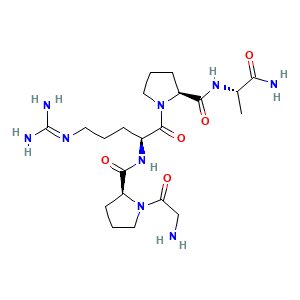 |
| CAS Number | 135679-88-8 |
| Alias / Common Name | Pentapeptide-3; Vialox |
| Molecular Formula | C21H37N9O5 |
| Molecular Weight | 495.6 g/mol |
| INCI Name | Pentapeptide-3 |
| Functional Class | Synthetic pentapeptide; postsynaptic nAChR competitive modulator; neuromuscular expression-line active; crabtoxin biomimetic |
| Purity / Assay | ≥98% (HPLC); confirm by batch COA |
| Appearance | White to off-white powder |
| Solubility / Handling | Freely water-soluble; dissolve in deionised water or aqueous phase at ambient temperature; no co-solvent required |
| pH Stability | Optimal stability at pH 4.5–7.0; confirm in target formulation base after all actives |
| Storage | Store sealed below 25°C in cool, dry, light-protected conditions; follow batch COA and SDS |
> Mechanism & Positioning
Pentapeptide-3 (Vialox, CAS 135679-88-8) is a synthetic pentapeptide designed as a structural analog of crabtoxin peptides, targeting postsynaptic nicotinic acetylcholine receptors (nAChR) at the neuromuscular junction as a competitive modulator. Published Pentapeptide-3 (Vialox) literature discusses competitive inhibition of acetylcholine binding at the α1 subunit orthosteric site of the muscle-type nAChR (α1/β1/δ/ε configuration), attenuating postsynaptic membrane depolarisation in response to presynaptic acetylcholine release. Cell-based postsynaptic neuromuscular model studies document dose-dependent inhibition of nAChR-mediated electrophysiological response in muscle cell assay systems, consistent with competitive receptor blockade at the acetylcholine binding site. Neuromuscular model data also notes the postsynaptic nAChR mechanism as independent from and complementary to the presynaptic SNARE complex pathway of Argireline (Acetyl Hexapeptide-8) and the GABAergic Ca²⁺ pathway of Leuphasyl (Pentapeptide-18) — enabling full-axis neuromuscular attenuation in combined three-mechanism serums.
Based on available in vitro data, Pentapeptide-3 (Vialox) is positioned for expression-line serum, anti-wrinkle concentrate and periorbital formulation concepts where postsynaptic nAChR modulation is the primary mechanistic direction. The postsynaptic mechanism differentiates Vialox from presynaptic SNARE actives such as Argireline and SNAP-8, and from GABAergic Ca²⁺ actives such as Leuphasyl (Pentapeptide-18) — enabling a three-mechanism pre- and postsynaptic neuromuscular serum system.
> Application Concepts
Expression-Line Serum: Three-Mechanism Neuromuscular Architecture
Pentapeptide-3 (Vialox) is freely water-soluble at 0.001–0.01% (w/w) in glycerin–water concentrates, HA solutions and buffered aqueous serum bases without co-solvent. Introduce during the cool-down phase below 45°C alongside other water-soluble neuromuscular peptides. Vialox (postsynaptic nAChR) combines with Argireline (presynaptic SNARE) and Leuphasyl (presynaptic GABAergic Ca²⁺) for three-mechanism, three-point neuromuscular attenuation in a single aqueous concentrate — all three are water-soluble, stable at pH 4.5–7.0 and added during cool-down at 45°C or below. Confirm combined pH, clarity and assay retention via accelerated stability at 40°C/75% RH before scale-up.
Comparison with Syn-Ake (Dipeptide Diaminobutyroyl Benzylamide Diacetate)
Pentapeptide-3 (Vialox) and Syn-Ake (Dipeptide Diaminobutyroyl Benzylamide Diacetate) both target the postsynaptic nAChR — Vialox as a crabtoxin-class pentapeptide analog; Syn-Ake as a Waglerin-1 dipeptide analog. The two molecules approach the nAChR orthosteric site via structurally distinct pharmacophores, providing complementary postsynaptic coverage across two independent natural toxin sequence classes. In development protocols, formulators evaluate Vialox and Syn-Ake side-by-side in the same expression-line serum base at 0.001–0.01% to compare postsynaptic nAChR inhibition profiles — both are freely water-soluble and pH-compatible at 4.5–7.0. Contact info@tcspeptides.com for combined evaluation data discussion.
Periorbital and Facial Expression Formulation Targeting
The postsynaptic nAChR modulation mechanism of Pentapeptide-3 is particularly relevant for periorbital (orbicularis oculi) and forehead (frontalis) targeted treatments where repeated expression muscle contraction is the primary driver of line formation. At 0.001–0.01% in lightweight eye-contour gel, cream-gel eye treatment or hydrogel patch, Vialox integrates without co-solvent and is compatible with caffeine (0.5–2.0%), niacinamide (2–5%) and hyaluronic acid at pH 5.0–6.5 in the periorbital application base. For comprehensive periorbital neuromuscular positioning, combine Vialox (postsynaptic nAChR) with Leuphasyl (presynaptic GABAergic Ca²⁺) and Argireline (SNARE complex) for three-axis expression-line attenuation. Confirm combined stability and assay retention before scale-up.
> Handling & Formulation Notes
Dissolve Pentapeptide-3 (Vialox) in deionised water or the aqueous phase at ambient temperature at 0.001–0.01% (w/w) without co-solvent. Freely water-soluble and stable at standard processing temperatures. Introduce during the cool-down phase below 45°C. Maintain formulation pH within 4.5–7.0.
Evaluate compatibility with preservative systems and chelating agents at typical cosmetic concentrations. Confirm peptide assay retention by HPLC after accelerated stability at 40°C/75% RH before production scale-up. Contact info@tcspeptides.com with project brief for combined evaluation data on nAChR-peptide combinations.
> Supply & Documentation
Pentapeptide-3 (Vialox) (CAS 135679-88-8) is available from TCS NEXUS S.L. (Valencia, Spain) for B2B cosmetic raw material projects. Standard documentation: COA, TDS, SDS. Sample and bulk quantities are discussed on a per-project basis; contact info@tcspeptides.com to initiate a sourcing review.
TCS NEXUS S.L. supports procurement and formulation teams in Germany, France, Italy, Spain, the United Kingdom, the Netherlands, Belgium, Poland, Sweden and Portugal, as well as international buyers in the United States, Canada, Japan, South Korea, Australia and New Zealand.
> Packaging & Storage
Pentapeptide-3 (Vialox) is supplied in sealed aluminium foil bags or bulk containers. Minimum quantities and packaging configurations are confirmed per order. Store below 25°C in a cool, dry location, away from moisture and direct light. Follow batch COA and SDS for specific storage and handling conditions.
> FAQ
What is Pentapeptide-3 (Vialox)?
Pentapeptide-3 (Vialox) (CAS 135679-88-8) is a cosmetic raw material supplied by TCS NEXUS S.L. (Valencia, Spain) for B2B cosmetic formulators. In cosmetic literature, Pentapeptide-3 (Vialox) is positioned as a synthetic nAChR-inhibiting pentapeptide that modulates muscular neuromuscular junction signalling — evaluated in expression-line reduction serums targeting crow’s feet, forehead lines and perioral wrinkles via a competitive acetylcholine receptor antagonist mechanism. TCS NEXUS S.L. supplies Pentapeptide-3 as a B2B pure pentapeptide for B2B cosmetic formulators.
What is the CAS number for Pentapeptide-3 (Vialox)?
The CAS number for Pentapeptide-3 (Vialox) is 135679-88-8. The INCI name for cosmetic regulatory documentation and CPNP notification is Pentapeptide-3; confirm CAS 135679-88-8 and INCI identity against the batch COA when building product files.
How does Vialox relax expression lines — what is the nAChR competitive mechanism?
Pentapeptide-3 (Vialox) is a synthetic peptide modelled on the tubocurarine and crabtoxin family of neuromuscular blockers. It acts at the postsynaptic membrane as a competitive antagonist of the muscle nicotinic acetylcholine receptor (nAChR): by competing with acetylcholine for the receptor it reduces the ion flux that triggers muscle-fibre contraction, temporarily relaxing the micro-contractions behind expression lines. This postsynaptic, competitive action is its expression-line rationale.
What use level of Vialox is typical, and does the pure vs trade-solution basis matter?
The appropriate dose is formulation- and claim-dependent, so build it up conservatively from your own evaluation instead of fixing on one published number. Vialox reaches the market both as a diluted trade solution and as pure peptide; we supply the pure material with COA so you can dose precisely on a pure-peptide basis. Contact info@tcspeptides.com to align documentation with your dosing basis.
Which peptides combine with Vialox for a multi-pathway expression-line system?
As a postsynaptic nAChR modulator, Vialox pairs with peptides acting on other steps of the neuromuscular axis: presynaptic SNARE inhibitors such as Argireline (Acetyl Hexapeptide-8) and SNAP-8 (Acetyl Octapeptide-3), and the GABAergic modulator Leuphasyl (Pentapeptide-18). Addressing the contraction signal from both the pre- and postsynaptic side is the rationale for these combinations. All are water-soluble; confirm combined stability and pH in the finished base.
How does Vialox differ from Syn-Ake — two postsynaptic nAChR peptides?
Both Pentapeptide-3 (Vialox) and Syn-Ake (Dipeptide Diaminobutyroyl Benzylamide Diacetate) act postsynaptically at the muscle nicotinic acetylcholine receptor, but they derive from different natural templates — Vialox from the tubocurarine/crabtoxin family, Syn-Ake from the venom peptide Waglerin-1 — and differ in sequence and size. Formulators sometimes choose between them, or combine them, based on brief, feel and project economics. Both are freely water-soluble powders.
How should Vialox be incorporated during manufacturing?
Pentapeptide-3 is freely water-soluble — dissolve it in deionised water or the aqueous phase without a co-solvent, and add it during the cool-down phase below 45°C to avoid heat degradation. Standard aqueous serum and light-emulsion cool-down protocols suit it well; confirm assay retention with accelerated stability testing before scale-up.
What pH range keeps Vialox stable in a finished formula?
Pentapeptide-3 (Vialox) is most stable at pH 4.5–7.0, matching typical serum and light-emulsion targets. Confirm the finished-product pH after all actives and buffering agents are incorporated, and evaluate combined stability when it shares a base with low-pH actives such as ascorbic acid.
Is Pentapeptide-3 (Vialox) compatible with other actives in multi-active cosmetic systems?
Pentapeptide-3 (Vialox) is compatible with standard cosmetic actives at pH 4.5–7.0 in aqueous or emulsion systems. Evaluate combined system pH drift, clarity and assay retention; confirm preservative compatibility. Run accelerated stability testing at 40°C/75% RH before scale-up.
Is Pentapeptide-3 (INCI) compliant with EU Cosmetics Regulation 1223/2009?
Pentapeptide-3 is not listed as a restricted, prohibited or regulated substance under EU Cosmetics Regulation 1223/2009 Annexes II–VI. The finished product manufacturer is responsible for the CPSR and CPNP notification. Use CAS 135679-88-8 and INCI name Pentapeptide-3 consistently in all regulatory documentation; confirm purity and identity against the batch COA.
How should Pentapeptide-3 (Vialox) be stored?
Store Pentapeptide-3 (Vialox) sealed below 25°C in a cool, dry location protected from direct light and moisture. Once opened, reseal the container immediately. Follow specific storage and handling conditions stated in the SDS and batch COA. Confirm shelf life for the specific batch before incorporating into production formulations.
What documentation does TCS NEXUS S.L. provide for Pentapeptide-3 (Vialox)?
TCS NEXUS S.L. provides COA (confirming CAS 135679-88-8 and HPLC purity ≥98% (HPLC)), TDS (Technical Data Sheet) and SDS (Safety Data Sheet) for Pentapeptide-3 (Vialox). Additional documentation such as specification sheets and INCI confirmation letters is available on a per-project basis. Contact info@tcspeptides.com to initiate a documentation and sourcing discussion.
What MOQ and sample options are available for Pentapeptide-3 (Vialox)?
Sample and bulk quantities for Pentapeptide-3 (Vialox) are confirmed on a per-project basis through TCS NEXUS S.L. Minimum order quantities depend on current stock, packaging configuration and project scope. R&D teams are encouraged to request samples for stability and concentration-range evaluation before bulk planning. Contact info@tcspeptides.com with project specification to begin a sourcing review.
> Technical Support and Samples
Request COA documents, sample availability, or support for custom synthesis.