
Dipeptide-2 (Val-Trp) (CAS 24587-37-9) is supplied by TCS NEXUS S.L. (Valencia, Spain) for European cosmetic formulators, brand R&D teams and B2B buyers reviewing cosmetic peptide raw material applications. A freely water-soluble peptide, it dissolves directly in aqueous concentrates without co-solvents at pH 4.5–7.0, with cool-down addition below 40°C recommended in standard serum and leave-on manufacturing protocols.
> Technical Specifications
| Product Name | Dipeptide-2 (Val-Trp) |
|---|---|
| Molecular Structure | 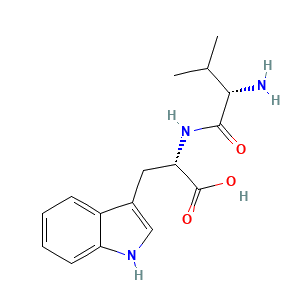 |
| CAS Number | 24587-37-9 |
| Alias / Common Name | Dipeptide-2; Val-Trp; valine-tryptophan; ACE-inhibiting vasoactive dipeptide |
| Molecular Formula | C16H21N3O3 |
| Molecular Weight | 303.4 g/mol |
| INCI Name | Dipeptide-2 |
| Peptide Sequence | Val-Trp — valine-tryptophan (ACE-inhibiting dipeptide) |
| Functional Class | Naturally derived dipeptide; ACE (angiotensin-converting enzyme) inhibitor; vasoactive agent; lymphatic drainage and periorbital puffiness active |
| Purity / Assay | ≥98% (HPLC); confirm by batch COA |
| Appearance | White to off-white powder |
| Solubility / Handling | Freely water-soluble at evaluation concentrations (0.001–0.01%); dissolves directly in deionised water or the aqueous phase without co-solvent. Add at cool-down below 40°C. |
| pH Stability | Optimal stability at pH 4.5–7.0. Confirm stability in the complete formulation base. |
| Storage | Store sealed below 25°C in a cool, dry location protected from direct light and moisture. Follow SDS and batch COA conditions. |
> Mechanism & Positioning
Dipeptide-2 (Val-Trp) is a naturally derived vasoactive dipeptide characterised for ACE (angiotensin-converting enzyme) inhibition — a vasoregulatory mechanism with direct relevance to periorbital fluid accumulation and lymphatic drainage function. Published Dipeptide-2 literature discusses competitive inhibition of ACE activity: ACE converts angiotensin I to angiotensin II (a potent vasoconstrictor) and inactivates bradykinin (a vasodilator and lymph-flow promoter). By inhibiting ACE, Dipeptide-2 reduces local angiotensin II accumulation and preserves bradykinin activity — shifting the vasomotor balance toward vasodilation and improved periorbital microcirculation and lymph fluid drainage. Cell-based vascular endothelial studies document reduced vasoconstriction indices and attenuated angiotensin II signalling following Val-Trp treatment. Periorbital drainage model data also notes reduction in fluid accumulation markers and lymphatic flow improvement in ex vivo periorbital tissue models, consistent with the vasoregulatory mechanism positioning Dipeptide-2 for under-eye bag and puffiness reduction concentrates.
Dipeptide-2 builds periorbital anti-puffiness systems with Acetyl Tetrapeptide-5 (Eyeseryl) — which targets plasma kallikrein/kinin pathway and glycation-related periorbital fluid retention — for a dual ACE/plasma kallikrein anti-oedema strategy in a single eye-contour gel. Add caffeine (2–4%) for additional lymphatic and microcirculatory drainage support alongside Dipeptide-2’s ACE inhibition in premium periorbital concentrates. Contact info@tcspeptides.com with formulation specification.
> Application Concepts
Periorbital Anti-Puffiness Serum and ACE-Inhibiting Dipeptide Architecture
Dipeptide-2 at 0.001–0.01% dissolves directly in deionised water and is added at cool-down below 40°C — a clean, lightweight addition to eye-contour gels, periorbital serums and under-eye patch/hydrogel systems. At pH 5.0–6.5, it is compatible with standard aqueous gel bases containing carbomer, xanthan gum or hyaluronic acid. For a dual-mechanism periorbital concentrate, combine Dipeptide-2 (ACE / angiotensin II pathway) with Acetyl Tetrapeptide-5 (Eyeseryl) (plasma kallikrein / kinin / glycation pathway) in a shared aqueous gel base at pH 5.5–6.5 — both are water-soluble and require no co-solvent, enabling a clean two-peptide periorbital serum architecture.
ACE Pathway vs Plasma Kallikrein Pathway — Two Independent Periorbital Oedema Mechanisms
Periorbital puffiness involves two converging fluid accumulation mechanisms: angiotensin II-driven vasoconstriction reducing periorbital lymph drainage (targeted by Dipeptide-2 via ACE inhibition) and plasma kallikrein/kinin-mediated capillary permeability increase driving localised fluid leakage into periorbital interstitium (targeted by Acetyl Tetrapeptide-5 / Eyeseryl). ACE inhibition improves lymph outflow to reduce existing oedema; plasma kallikrein inhibition reduces capillary leakage to prevent new fluid accumulation. These are mechanistically independent pathways — combining Dipeptide-2 and Eyeseryl in a single periorbital serum addresses both the drainage and the leakage axis for more comprehensive anti-puffiness activity than either alone.
Under-Eye Bag, Morning Puffiness and Eye-Contour Gel Format Applications
Dipeptide-2 is positioned for three periorbital market segments: morning puffiness reduction serums (overnight fluid accumulation drainage — ACE inhibition for improved lymph flow on waking), structural under-eye bag concentrates (persistent periorbital oedema from chronic vascular dysregulation) and premium eye-contour gels combining vasoactive and anti-glycation mechanisms. All three formats benefit from the peptide’s water solubility and clean gel compatibility at periorbital-appropriate pH 5.5–6.5. For refreshing morning serums, combine Dipeptide-2 with caffeine (2–4%) and cooling agents (menthol 0.05–0.1% or peppermint extract) alongside the ACE inhibiting dipeptide for multi-sensory morning eye revival positioning.
> Handling & Formulation Notes
Dissolve Dipeptide-2 directly in deionised water or the aqueous phase at target concentrations (0.001–0.01%) without co-solvent or pre-dispersion step. Add the aqueous solution to the formulation at cool-down below 40°C. No PG pre-dispersion or special dissolution step is required at evaluation concentrations. For concentrations above 0.05%, prepare a 1% aqueous stock solution and add the calculated aliquot at cool-down.
Confirm stability of Dipeptide-2 (Val-Trp) in the complete periorbital formulation at 40°C/75% RH for 12 weeks before scale-up. Formulate at pH 4.5–7.0; a periorbital serum at pH 5.5–6.5 is optimal for Dipeptide-2 stability. Monitor tryptophan residue photostability — include UV absorbers or antioxidants if the periorbital product will be exposed to light during use. Follow SDS and batch COA for storage and handling.
For formulators building a comprehensive periorbital multi-active, Dipeptide-2 combines with Biotinoyl Tripeptide-1 to address follicle anchoring and periorbital skin barrier support alongside the drainage and leakage axis. EDTA at ≤0.1% is compatible as a chelating buffer; avoid strong oxidising agents (H₂O₂ ≥1%, benzoyl peroxide) and high-pH systems above pH 8.0.
> Supply & Documentation
Dipeptide-2 (Val-Trp) (CAS 24587-37-9) is available from TCS NEXUS S.L. (Valencia, Spain) for B2B cosmetic raw material projects. Standard documentation: COA, TDS, SDS. Sample and bulk quantities are discussed on a per-project basis; contact info@tcspeptides.com to initiate a sourcing review.
TCS NEXUS S.L. supports procurement and formulation teams in Germany, France, Italy, Spain, the United Kingdom, the Netherlands, Belgium, Poland, Sweden and Portugal, as well as international buyers in the United States, Canada, Japan, South Korea, Australia and New Zealand.
> Packaging & Storage
Dipeptide-2 (Val-Trp) is supplied in sealed aluminium foil bags or bulk containers. Minimum quantities and packaging configurations are confirmed per order. Store below 25°C in a cool, dry location, away from moisture and direct light. Follow batch COA and SDS for specific storage and handling conditions.
> FAQ
What is Dipeptide-2 (Val-Trp)?
Dipeptide-2 (Val-Trp) (CAS 24587-37-9) is a cosmetic raw material supplied by TCS NEXUS S.L. (Valencia, Spain) for B2B cosmetic formulators. It is the primary ingredient positioning for eye-contour serums, periorbital anti-puffiness gels and dark circle reduction products at 0.1–1.0%.
What is the CAS number for Dipeptide-2 (Val-Trp)?
The CAS number for Dipeptide-2 (Val-Trp) is 24587-37-9. The INCI name for cosmetic regulatory documentation and CPNP notification is Dipeptide-2; confirm CAS 24587-37-9 and INCI identity against the batch COA when building product files.
How does Dipeptide-2 reduce puffiness — what is the ACE-inhibition mechanism?
Dipeptide-2 (Val-Trp) is a naturally derived dipeptide discussed as an inhibitor of angiotensin-converting enzyme (ACE). By modulating this vasoactive pathway it is positioned to support lymphatic drainage and reduce fluid retention around the eyes — targeting the drainage of fluid that causes under-eye puffiness rather than blocking its formation.
What use level of Dipeptide-2 is typical, and how should it be evaluated?
Establish the use level conservatively for your base and claim rather than to a fixed figure; Dipeptide-2 is often a trade solution, so confirm your dosing basis. We supply the pure material with COA — contact info@tcspeptides.com to align documentation.
Which actives pair with Dipeptide-2 in an eye-contour formula?
Dipeptide-2 (drainage) is classically paired with Acetyl Tetrapeptide-5 (Eyeseryl), which limits fluid formation via ACE modulation and anti-glycation — together addressing both the formation and the clearance of under-eye fluid — and it combines with caffeine and niacinamide. It is water-soluble; keep the eye system within pH 5–7 and confirm combined stability.
How does Dipeptide-2 differ from Eyeseryl for under-eye bags?
Both are water-soluble anti-puffiness peptides used together around the eye: Dipeptide-2 (Val-Trp) supports the lymphatic clearance of fluid that has already pooled, while Acetyl Tetrapeptide-5 (Eyeseryl) works to limit fluid build-up in the first place through ACE modulation, capillary permeability and anti-glycation. Using them together tackles both sides of periorbital puffiness. Dipeptide-2 is freely water-soluble.
What addition temperature is recommended for Dipeptide-2 (Val-Trp) during manufacturing?
Introduce Dipeptide-2 (Val-Trp) during the cool-down phase at temperatures below 40°C; avoid prolonged exposure above this threshold. Standard aqueous or emulsion cool-down protocols are fully compatible with this addition requirement. Confirm thermal stability in the specific manufacturing process with accelerated stability data before committing to production scale.
What pH range keeps Dipeptide-2 stable in an eye formula?
Dipeptide-2 is most stable at roughly pH 5.0–7.0, suited to gentle eye-area products; confirm the finished-product pH after all actives are incorporated, with attention to mildness for the periorbital area.
Is Dipeptide-2 (Val-Trp) compatible with other actives in multi-active cosmetic systems?
Dipeptide-2 (Val-Trp) is compatible with standard cosmetic actives at pH 4.5–7.0 in aqueous or emulsion systems. Evaluate combined system pH drift, clarity and assay retention; confirm preservative compatibility. Run accelerated stability testing at 40°C/75% RH before scale-up.
Is Dipeptide-2 (INCI) compliant with EU Cosmetics Regulation 1223/2009?
Dipeptide-2 is not listed as a restricted, prohibited or regulated substance under EU Cosmetics Regulation 1223/2009 Annexes II–VI. The finished product manufacturer is responsible for the CPSR and CPNP notification. Use CAS 24587-37-9 and INCI name Dipeptide-2 consistently in all regulatory documentation; confirm purity and identity against the batch COA.
How should Dipeptide-2 (Val-Trp) be stored?
Store Dipeptide-2 (Val-Trp) sealed below 25°C in a cool, dry location protected from direct light and moisture. Once opened, reseal the container immediately. Follow specific storage and handling conditions stated in the SDS and batch COA. Confirm shelf life for the specific batch before incorporating into production formulations.
What documentation does TCS NEXUS S.L. provide for Dipeptide-2 (Val-Trp)?
TCS NEXUS S.L. provides COA (confirming CAS 24587-37-9 and HPLC purity ≥98% (HPLC)), TDS (Technical Data Sheet) and SDS (Safety Data Sheet) for Dipeptide-2 (Val-Trp). Additional documentation such as specification sheets and INCI confirmation letters is available on a per-project basis. Contact info@tcspeptides.com to initiate a documentation and sourcing discussion.
What MOQ and sample options are available for Dipeptide-2 (Val-Trp)?
Sample and bulk quantities for Dipeptide-2 (Val-Trp) are confirmed on a per-project basis through TCS NEXUS S.L. Minimum order quantities depend on current stock, packaging configuration and project scope. R&D teams are encouraged to request samples for stability and concentration-range evaluation before bulk planning. Contact info@tcspeptides.com with project specification to begin a sourcing review.
> Technical Support and Samples
Request COA documents, sample availability, or support for custom synthesis.