
NMN (Nicotinamide Mononucleotide) (CAS 1094-61-7) is supplied by TCS NEXUS S.L. (Valencia, Spain) for European cosmetic formulators, brand R&D teams and B2B buyers reviewing cosmetic active ingredient and nutraceutical raw material applications. A freely water-soluble nucleotide, it dissolves directly in aqueous concentrates without co-solvents at pH 4.5–7.0, with cool-down addition below 40°C recommended in standard serum and leave-on manufacturing protocols.
> Technical Specifications
| Product Name | NMN (Nicotinamide Mononucleotide) |
|---|---|
| Molecular Structure | 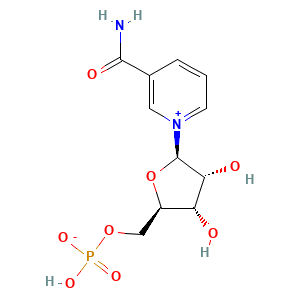 |
| CAS Number | 1094-61-7 |
| Alias / Common Name | NMN; Nicotinamide Mononucleotide; β-NMN; β-nicotinamide mononucleotide |
| Molecular Formula | C11H15N2O8P |
| Molecular Weight | 334.2 g/mol |
| INCI Name | Nicotinamide Mononucleotide |
| Peptide Sequence | Nicotinamide + ribose-5-phosphate — NMN (direct NAD+ biosynthesis precursor via NMNAT enzyme) |
| Functional Class | Naturally occurring NAD+ biosynthesis precursor; direct NMNAT substrate; sirtuin (SIRT1–7) activation pathway active; skin longevity and cellular NAD+ metabolism active |
| Purity / Assay | ≥98% (HPLC); confirm by batch COA |
| Appearance | White to off-white crystalline powder |
| Solubility / Handling | Freely water-soluble at evaluation concentrations (0.1–3.0%); dissolves directly in deionised water or the aqueous phase without co-solvent. Add at cool-down below 40°C. |
| pH Stability | Optimal stability at pH 4.5–7.0 in aqueous cosmetic systems. More stable than NAD+ at neutral-alkaline pH — confirm stability in the complete formulation base. |
| Storage | Store sealed below -20°C (frozen) or below 4°C (refrigerated) for long-term stability. Short-term storage below 25°C with moisture and light protection acceptable. Follow SDS and batch COA conditions. |
> Mechanism & Positioning
NMN (Nicotinamide Mononucleotide, β-NMN) is the direct precursor to NAD+ in the Preiss-Handler and salvage biosynthesis pathways: the NMNAT (nicotinamide mononucleotide adenylyltransferase) enzyme family (NMNAT1/2/3) condenses NMN with ATP to generate NAD+ intracellularly. Published NMN biology literature discusses efficient intracellular NAD+ replenishment via the NMN → NAD+ (NMNAT) route in aged cells where NAMPT activity (the rate-limiting enzyme in the salvage pathway from nicotinamide) is reduced. Cell-based aged fibroblast and keratinocyte studies document restoration of NAD+ pool levels, increased SIRT1 deacetylase activity and improved mitochondrial membrane potential following NMN treatment, consistent with NMNAT-mediated NAD+ resynthesis. Sirtuin-mediated longevity signalling model data also notes upregulation of PGC-1α (mitochondrial biogenesis) and FOXO3a (stress resistance and autophagy) in NMN-supplemented aged cell models, downstream of SIRT1 NAD+-dependent deacetylation. NMN’s superior aqueous stability compared to NAD+ (particularly at pH 5.0–7.0) makes it more appropriate for standard cosmetic formulation pH ranges without refrigerated storage of the finished product, providing a more formulatable NAD+ pathway active than the coenzyme itself.
NMN builds complementary NAD+ precursor systems with NAD+ (Nicotinamide Adenine Dinucleotide) — providing direct coenzyme and biosynthesis precursor in the same formulation for maximum NAD+ pool replenishment. For sirtuin-activation longevity positioning, add Ergothioneine for TAUT-mediated antioxidant protection of the mitochondrial NAD+ utilisation system and Glutathione (GSH) for redox balance support alongside NAD+ metabolism. Contact info@tcspeptides.com with formulation specification.
> Application Concepts
NAD+ Precursor Serum and NMN Biosynthesis Pathway Architecture
NMN at 0.1–3.0% dissolves directly in deionised water and is added at cool-down below 40°C — a clean addition to aqueous longevity serums, anti-age essences and science-forward ampoule concentrates at pH 5.0–7.0. NMN’s broader pH stability window (vs NAD+ which requires pH ≤ 6.5 for optimal stability) makes it more appropriate for standard serum base pH ranges (5.5–6.5) without special buffering. For a NAD+ pathway serum, combine NMN (1.0–2.0%) with niacinamide (4–5%) in a pH 5.5–6.0 HA-based serum base — niacinamide provides an additional NAD+ precursor via the NAMPT salvage pathway alongside NMN’s NMNAT-direct route, and adds the established niacinamide barrier and brightening activity spectrum to the longevity positioning.
NMN vs NAD+ vs Niacinamide — Three Routes to Cellular NAD+ Replenishment in Topical Formulations
NAD+ can be replenished in the skin cell through three topical routes: direct NAD+ (bypasses biosynthesis — most direct but least stable above pH 6.5); NMN (NMNAT-mediated condensation with ATP → NAD+ — one enzymatic step, good stability at pH 5–7, primary route in aged cells with depleted NAMPT); niacinamide (NAM → NMN via NAMPT/NMNAT — two-step enzymatic conversion, most stable, most established in cosmetics, less efficient in aged skin with reduced NAMPT). NMN provides an intermediate strategy: more stable and formulatable than direct NAD+, more efficient in aged NAD+-depleted skin than niacinamide (bypassing the rate-limiting NAMPT step). Combining NAD+, NMN and niacinamide in a single longevity serum addresses all three replenishment routes — providing NAD+ regardless of cellular enzyme status (NAMPT or NMNAT availability) for maximum pathway redundancy in chronologically or UV-aged skin.
Longevity Serum, Mitochondrial Skin Energy and Anti-Age Ampoule Format Applications
NMN at 0.1–3.0% is positioned for three science-forward skin care segments: longevity and “biohacking” skin serums (NAD+ replenishment narrative — a high-engagement consumer category), mitochondrial energy serums (SIRT3/PGC-1α mitochondrial biogenesis targeting in dull and fatigued-looking skin), and professional anti-age ampoule concentrates (clinical-channel high-potency NMN single-use doses). For premium longevity ampoule positioning, combine NMN (2.0%), Ergothioneine (0.5%), Glutathione (0.5%) and niacinamide (4%) in a pH 5.5 citrate-buffered serum base — addressing NAD+ replenishment, mitochondrial antioxidant protection, redox balance and barrier ceramide co-stimulation in a single multi-mechanism longevity ampoule.
> Handling & Formulation Notes
Dissolve NMN directly in deionised water or the aqueous phase at target concentrations (0.1–3.0%) without co-solvent, heating or pre-dispersion step. Add to the formulation at cool-down below 40°C. NMN is considerably more stable in solution than NAD+ — standard serum pH 5.5–6.5 is appropriate without special buffering. Use a citrate or acetate buffer (10–50 mM) if formulating below pH 5.0 to maintain pH control across the product shelf life.
Confirm stability of NMN in the complete longevity formulation by HPLC at 40°C/75% RH at 4-week intervals for 12 weeks before scale-up. Monitor for nicotinamide riboside (NR) and nicotinamide (NAM) as degradation products. Consider amber glass or single-use ampoule packaging to minimise photodegradation. Follow SDS and batch COA for storage and handling; confirm shelf life for the specific batch. EDTA at ≤0.1% is compatible as a chelating buffer; avoid strong oxidising agents (H₂O₂ ≥1%, benzoyl peroxide) and high-pH systems above pH 8.0.
> Supply & Documentation
NMN (Nicotinamide Mononucleotide) (CAS 1094-61-7) is available from TCS NEXUS S.L. (Valencia, Spain) for B2B cosmetic raw material projects. Standard documentation: COA, TDS, SDS. Sample and bulk quantities are discussed on a per-project basis; contact info@tcspeptides.com to initiate a sourcing review.
TCS NEXUS S.L. supports procurement and formulation teams in Germany, France, Italy, Spain, the United Kingdom, the Netherlands, Belgium, Poland, Sweden and Portugal, as well as international buyers in the United States, Canada, Japan, South Korea, Australia and New Zealand.
> Packaging & Storage
NMN (Nicotinamide Mononucleotide) is supplied in sealed aluminium foil bags or bulk containers. Minimum quantities and packaging configurations are confirmed per order. Store below 25°C in a cool, dry location, away from moisture and direct light. Follow batch COA and SDS for specific storage and handling conditions.
> FAQ
What is NMN (Nicotinamide Mononucleotide)?
NMN (Nicotinamide Mononucleotide) (CAS 1094-61-7) is a cosmetic raw material supplied by TCS NEXUS S.L. (Valencia, Spain) for B2B cosmetic formulators. It is positioned for skin longevity serum, mitochondrial age-care concentrate and NAD+-precursor topical formulations at 0.01–0.5%.
What is the CAS number for NMN (Nicotinamide Mononucleotide)?
The CAS number for NMN (Nicotinamide Mononucleotide) is 1094-61-7. The INCI name for cosmetic regulatory documentation and CPNP notification is Nicotinamide Mononucleotide; confirm CAS 1094-61-7 and INCI identity against the batch COA when building product files.
How does NMN raise cellular NAD+ — what is the NMNAT / sirtuin pathway?
NMN (Nicotinamide Mononucleotide) is a naturally occurring nucleotide — nicotinamide joined to ribose-5-phosphate — that sits one step upstream of NAD+ in the salvage pathway. Cells convert it directly to NAD+ via the NMNAT enzymes, replenishing the NAD+ pool that fuels sirtuin (SIRT1–7) signalling, PARP-mediated DNA repair and mitochondrial energy metabolism. Because skin NAD+ declines with age, NMN is positioned for cellular-energy and age-care claim directions in cosmetic formulation.
What use level of NMN is typical, and how should it be evaluated?
Use level is formulation- and claim-specific, so build it up conservatively from your own trials rather than a fixed number; the TDS references a low single-digit percent evaluation window as a starting point, but the right level depends on your base and claim. We supply pure NMN with COA so you can dose precisely on a pure-material basis; contact info@tcspeptides.com to align documentation with your target.
Which actives pair with NMN in an age-care or energy formula?
NMN combines naturally with other NAD+-pathway and vitality actives: niacinamide (vitamin B3, a further-upstream NAD+ precursor) for barrier and tone, NAD+ itself, and antioxidants such as resveratrol-type sirtuin support or vitamin E. All are water-soluble or water-dispersible; keep the system within pH 4.5–7.0 and confirm combined stability, since NMN — like other NAD+-pathway molecules — is sensitive to heat and prolonged storage.
How does NMN differ from NAD+ and from niacinamide?
The three sit on the same salvage pathway but at different points: niacinamide (nicotinamide, vitamin B3) is the furthest upstream vitamin precursor, NMN is the direct one-step precursor to NAD+, and NAD+ is the coenzyme itself. NMN is freely water-soluble and, per the TDS, more stable than NAD+ toward neutral-to-alkaline pH, which can make it an easier NAD+-pathway ingredient to formulate. This raw material is β-NMN (CAS 1094-61-7); TCS NEXUS S.L. also supplies NAD+ separately — confirm which molecule and CAS your formulation needs.
How should NMN be incorporated, and why keep temperatures low?
NMN is freely water-soluble — dissolve it directly in deionised water or the aqueous phase without a co-solvent, and add it during the cool-down phase below 40°C, since it is sensitive to heat. For the finished product, cold-chain or refrigerated handling and low-headspace, moisture- and light-protected packaging help preserve NMN content; confirm assay retention over the intended shelf life.
What pH range keeps NMN stable in a finished formula?
NMN is most stable at pH 4.5–7.0 in aqueous cosmetic systems and, per the TDS, holds up better than NAD+ toward the neutral-to-alkaline end of that range. Confirm the finished-product pH after all actives and buffering agents are incorporated, and verify NMN assay retention in the complete base rather than assuming raw-material stability.
What cosmetic claim direction is NMN positioned for?
Its role in cellular NAD+ metabolism positions NMN for skin-vitality, energy and age-care claim directions in serums, essences and eye products, typically within antioxidant or NAD+-pathway systems. Keep claims within EU cosmetic boundaries — cosmetic skin appearance and feel, not systemic or medicinal effects — and substantiate them with your own use and stability data.
Is Nicotinamide Mononucleotide (INCI) compliant with EU Cosmetics Regulation 1223/2009?
Nicotinamide Mononucleotide is not listed as a restricted, prohibited or regulated substance under EU Cosmetics Regulation 1223/2009 Annexes II–VI. The finished product manufacturer is responsible for the CPSR and CPNP notification. Use CAS 1094-61-7 and INCI name Nicotinamide Mononucleotide consistently in all regulatory documentation; confirm purity and identity against the batch COA.
How should NMN (Nicotinamide Mononucleotide) be stored?
Store NMN (Nicotinamide Mononucleotide) sealed below 25°C in a cool, dry location protected from direct light and moisture. Once opened, reseal the container immediately. Follow specific storage and handling conditions stated in the SDS and batch COA. Confirm shelf life for the specific batch before incorporating into production formulations.
What documentation does TCS NEXUS S.L. provide for NMN (Nicotinamide Mononucleotide)?
TCS NEXUS S.L. provides COA (confirming CAS 1094-61-7 and HPLC purity ≥98% (HPLC)), TDS (Technical Data Sheet) and SDS (Safety Data Sheet) for NMN (Nicotinamide Mononucleotide). Additional documentation such as specification sheets and INCI confirmation letters is available on a per-project basis. Contact info@tcspeptides.com to initiate a documentation and sourcing discussion.
What MOQ and sample options are available for NMN (Nicotinamide Mononucleotide)?
Sample and bulk quantities for NMN (Nicotinamide Mononucleotide) are confirmed on a per-project basis through TCS NEXUS S.L. Minimum order quantities depend on current stock, packaging configuration and project scope. R&D teams are encouraged to request samples for stability and concentration-range evaluation before bulk planning. Contact info@tcspeptides.com with project specification to begin a sourcing review.
> Technical Support and Samples
Request COA documents, sample availability, or support for custom synthesis.