
Mu-conotoxin (XEP-018) (CAS 936616-33-0) is supplied by TCS NEXUS S.L. (Valencia, Spain) for European academic institutions, pharmaceutical and biotechnology R&D teams, and B2B research procurement buyers requiring pharmacological research peptide tools. A synthetic analog of the μ-conotoxin peptide class derived from cone snail venom, it is supplied for in vitro pharmacological and ion channel research applications under research-use conditions — not for cosmetic, food or human pharmacological use without appropriate regulatory authorisation.
> Technical Specifications
| Product Name | Mu-conotoxin (XEP-018) |
|---|---|
| Molecular Structure | 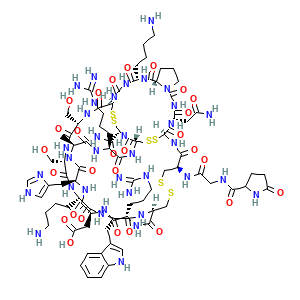 |
| CAS Number | 936616-33-0 |
| Alias / Common Name | Mu-conotoxin; Conotoxin; Conopeptide; XEP-018 |
| Molecular Formula | C92H139N35O28S6 |
| Molecular Weight | 2375.7 g/mol |
| INCI Name | Mu-conotoxin |
| Functional Class | Synthetic conotoxin research peptide; voltage-gated sodium channel (Nav) blocker; pharmacological research tool |
| Purity / Assay | ≥95% (HPLC); confirm by batch COA |
| Appearance | White to off-white lyophilised powder |
| Solubility / Handling | Freely water-soluble; reconstitute in sterile deionised water or aqueous buffer at research concentrations; no co-solvent required |
| pH Stability | Stable at physiological pH 6.0–8.0 in buffered aqueous systems; confirm stability in specific research assay buffer |
| Storage | Store lyophilised powder sealed at −20°C protected from light and moisture; once reconstituted, store at −80°C in single-use aliquots and avoid freeze-thaw cycles |
> Mechanism & Positioning
Mu-conotoxin (XEP-018, CAS 936616-33-0) is a synthetic research-grade conopeptide analog belonging to the μ-conotoxin peptide family from cone snail (Conus geographus/Conus imperialis) venom, designed to selectively block voltage-gated sodium channels (Nav). Published Mu-conotoxin research literature discusses selective Nav subtype-blocking activity — specifically preferential affinity for Nav1.4 (skeletal muscle sodium channel) and Nav1.2 (neuronal) subtypes over Nav1.5 (cardiac), providing a pharmacological research tool for dissecting Nav channel subtype contributions to sodium channel-dependent action potential generation. Cell-based electrophysiology studies document concentration-dependent Nav channel current inhibition in patch-clamp assays, with IC50 values in the nanomolar range for Nav1.4 in voltage-clamp experimental systems. Sodium channel model data also notes pore-blocking interaction at the outer vestibule of the Nav channel, consistent with guanidinium toxin pharmacology, with relevance to pain physiology, muscle contraction and neurophysiology research programmes.
Based on available in vitro pharmacological data, Mu-conotoxin (XEP-018) is supplied as a research-grade tool peptide for voltage-gated sodium channel investigation in academic and pharmaceutical research contexts. Research applications include Nav subtype selectivity profiling, pain biology, neuromuscular physiology and ion channel pharmacology assay development. TCS NEXUS S.L. supplies Mu-conotoxin at research grade (CAS 936616-33-0) for B2B research procurement — contact info@tcspeptides.com with project specification, target Nav subtype requirements and intended research application. For related neuromuscular-junction peptide research, TCS NEXUS S.L. also supplies Syn-Ake (Dipeptide Diaminobutyroyl Benzylamide Diacetate) — a synthetic waglerin-1 analogue that blocks nAChR at the NMJ — and Vialox (Pentapeptide-3), a competitive nAChR inhibitor, both of which are positioned in expression-line cosmetic peptide research.
> Application Concepts
Nav Channel Research Applications and Assay Design
Mu-conotoxin (XEP-018) is supplied as a lyophilised research-grade peptide for reconstitution in sterile deionised water or standard electrophysiology buffer systems (PBS, HEPES, Ringer) at concentrations appropriate to the target Nav assay design. Standard research applications include patch-clamp electrophysiology (whole-cell and outside-out configurations), fluorescence-based Nav channel activity assays and radioligand competition binding experiments for Nav1.4 and Nav1.2 selectivity profiling. Prepare single-use aliquots at reconstitution; avoid repeated freeze-thaw cycles to preserve peptide integrity and bioactivity. Confirm activity in the specific assay system using a validated Nav1.4 blocking positive control before proceeding to selectivity panel studies.
Nav Subtype Selectivity Profile and Research Context
μ-Conotoxins are established pharmacological research tools for dissecting Nav channel subtype contributions to sodium current in excitable tissues. Published literature positions XEP-018 class peptides with preferential selectivity for Nav1.4 (skeletal muscle) and Nav1.2 (neuronal) subtypes, providing research contrast against TTX-resistant Nav1.5 (cardiac) and Nav1.8 (DRG sensory neurone) subtypes in multi-Nav assay panels. Research teams in pain biology programmes use Nav1.4 and Nav1.2 selective blockers to validate subtype contribution to nociceptor firing and peripheral sensitisation pathways. Confirm subtype selectivity profile against the batch COA and published pharmacological data before incorporating into assay interpretation.
Supply and Research Documentation
TCS NEXUS S.L. supplies Mu-conotoxin (XEP-018, CAS 936616-33-0) for European research procurement teams in academic institutions, pharmaceutical and biotechnology companies and contract research organisations requiring pharmacological research peptides. Research documentation includes COA confirming sequence identity and HPLC purity (≥95%), TDS and SDS. This peptide is supplied for research use only — not authorised for cosmetic, food, veterinary or human clinical administration without appropriate regulatory review and authorisation. Contact info@tcspeptides.com with institutional affiliation, project scope and required quantity for research procurement discussion.
> Handling & Formulation Notes
Mu-conotoxin (XEP-018) is supplied as a lyophilised research-grade powder and must be reconstituted under sterile conditions. Dissolve in sterile deionised water or a physiological buffer adjusted to pH 6.0–7.4 at the concentration required by the assay protocol; the native disulfide-bridged structure is most stable in this pH range. Prepare single-use aliquots immediately after reconstitution; store frozen aliquots at −80°C and avoid freeze-thaw cycles. Handle with appropriate laboratory precautions per the SDS.
Wear appropriate PPE (gloves, lab coat) when handling. The peptide contains disulfide bonds — avoid strongly reducing conditions (DTT, TCEP excess) that may disrupt the native disulfide bridge pattern. Confirm peptide solubility and activity in the specific assay buffer before committing to study design. Follow institutional biosafety and chemical handling protocols. EDTA at ≤0.1% is compatible as a chelating buffer; avoid strong oxidising agents (H₂O₂ ≥1%, benzoyl peroxide) and high-pH systems above pH 8.0.
> Supply & Documentation
Mu-conotoxin (XEP-018) (CAS 936616-33-0) is available from TCS NEXUS S.L. (Valencia, Spain) for B2B research procurement projects in academic, pharmaceutical and biotechnology contexts. Standard documentation: COA, TDS, SDS. Sample and bulk quantities are discussed on a per-project basis; contact info@tcspeptides.com to initiate a sourcing review.
TCS NEXUS S.L. supports procurement and formulation teams in Germany, France, Italy, Spain, the United Kingdom, the Netherlands, Belgium, Poland, Sweden and Portugal, as well as international buyers in the United States, Canada, Japan, South Korea, Australia and New Zealand.
> Packaging & Storage
Mu-conotoxin (XEP-018) is supplied in sealed aluminium foil bags or bulk containers. Minimum quantities and packaging configurations are confirmed per order. Store below 25°C in a cool, dry location, away from moisture and direct light. Follow batch COA and SDS for specific storage and handling conditions.
> FAQ
What is Mu-conotoxin (XEP-018)?
Mu-conotoxin (XEP-018) (CAS 936616-33-0) is a synthetic research-grade conopeptide analog belonging to the μ-conotoxin class, designed to selectively block voltage-gated sodium channels (Nav) — particularly Nav1.4 (skeletal muscle) and Nav1.2 (neuronal) subtypes. TCS NEXUS S.L. (Valencia, Spain) supplies Mu-conotoxin at ≥95% HPLC purity for B2B research procurement in pharmacological ion channel research, pain biology and neuromuscular physiology. This is a research-use tool peptide — not supplied for cosmetic, food or human pharmacological administration without appropriate regulatory review.
What is the CAS number for Mu-conotoxin (XEP-018)?
The CAS number for Mu-conotoxin (XEP-018) is 936616-33-0. The INCI name is Mu-conotoxin; confirm CAS 936616-33-0 and INCI identity against the batch COA when building research files.
How does Mu-conotoxin (XEP-018) block sodium channels — what is the Nav mechanism?
Mu-conotoxin (XEP-018) is a synthetic conopeptide, one of the disulfide-rich toxins from cone-snail venom that block voltage-gated sodium (Nav) channels. By binding the channel pore it prevents the sodium influx that generates nerve and muscle action potentials, which is why it is used as a selective pharmacological probe in pain and neuroscience research. It is supplied strictly for laboratory research use, not for cosmetic or human application.
What working concentrations are used for Mu-conotoxin (XEP-018) in research?
Working concentrations are defined entirely by the research assay — typically nanomolar-to-micromolar in electrophysiology and receptor studies — and must be set by the investigator, not to a fixed figure. We supply the pure research peptide with COA (identity and HPLC purity); contact info@tcspeptides.com for documentation to support your protocol.
Is Mu-conotoxin (XEP-018) used in cosmetic formulations?
No — Mu-conotoxin (XEP-018) is a research-use-only conotoxin and is not a cosmetic ingredient; it is not combined with cosmetic actives. In the laboratory it is used alongside other channel probes and buffers as dictated by the experimental design. Handle it according to institutional biosafety and chemical-safety protocols for synthetic peptide toxins.
How is Mu-conotoxin (XEP-018) reconstituted and handled in the lab?
Mu-conotoxin (XEP-018) is water-soluble and is typically reconstituted in deionised water or a suitable aqueous research buffer. Prepare single-use aliquots, keep them cold and avoid repeated freeze-thaw cycles to preserve the disulfide-bonded structure and Nav-blocking activity. Follow the SDS and batch COA for handling; it is for laboratory research use only.
What addition temperature is recommended for Mu-conotoxin (XEP-018) during manufacturing?
Reconstitute Mu-conotoxin (XEP-018) in sterile deionised water or the specific assay buffer at the required research concentration. Prepare fresh or from frozen aliquots immediately before the experiment; avoid freeze-thaw cycles to preserve peptide integrity. Use sterile filtration (0.22 μm) if the final assay system requires sterile conditions.
What conditions keep Mu-conotoxin (XEP-018) stable in the lab?
Mu-conotoxin (XEP-018) is most stable near neutral aqueous pH in a suitable research buffer and stored cold as lyophilised powder or single-use aliquots; the multiple disulfide bonds are sensitive to strong reducing agents and repeated freeze-thaw. Confirm handling conditions against the SDS and batch COA.
Is Mu-conotoxin (XEP-018) compatible with other actives in multi-active cosmetic systems?
Mu-conotoxin (XEP-018) is compatible with standard electrophysiology buffers and physiological saline at pH 6.0–8.0. Avoid strongly reducing conditions (excess DTT, TCEP) that may disrupt the native disulfide bridge pattern essential for Nav-blocking activity. Confirm peptide bioactivity in the specific assay buffer using a validated Nav1.4 control protocol before proceeding to selectivity panel studies.
What regulatory status applies to Mu-conotoxin (XEP-018) for research use?
Mu-conotoxin (XEP-018) is supplied for research use only — not for cosmetic, food, veterinary or human clinical administration without appropriate regulatory review and authorisation. Research users should comply with institutional biosafety and chemical handling protocols applicable to synthetic peptide toxins. In the EU, applicable regulations are those governing research chemical handling and laboratory safety at the institutional level. Contact info@tcspeptides.com with institutional affiliation for documentation.
How should Mu-conotoxin (XEP-018) be stored?
Store Mu-conotoxin (XEP-018) as lyophilised powder sealed at −20°C in the dark, protected from moisture. Once reconstituted, prepare single-use aliquots and store at −80°C; avoid freeze-thaw cycles to preserve the native disulfide bridge structure and Nav-blocking bioactivity. Follow specific storage and handling conditions stated in the SDS and batch COA.
What documentation does TCS NEXUS S.L. provide for Mu-conotoxin (XEP-018)?
TCS NEXUS S.L. provides COA (confirming CAS 936616-33-0 and HPLC purity ≥95% (HPLC)), TDS (Technical Data Sheet) and SDS (Safety Data Sheet) for Mu-conotoxin (XEP-018). Additional documentation such as specification sheets and INCI confirmation letters is available on a per-project basis. Contact info@tcspeptides.com to initiate a documentation and sourcing discussion.
What MOQ and sample options are available for Mu-conotoxin (XEP-018)?
Sample and bulk quantities for Mu-conotoxin (XEP-018) are confirmed on a per-project basis through TCS NEXUS S.L. Minimum order quantities depend on current stock, packaging configuration and project scope. R&D teams are encouraged to request samples for stability and concentration-range evaluation before bulk planning. Contact info@tcspeptides.com with project specification to begin a sourcing review.
> Technical Support and Samples
Request COA documents, sample availability, or support for custom synthesis.