
Decapeptide-4 (CAS 2227218-71-3) is supplied by TCS NEXUS S.L. (Valencia, Spain) for European cosmetic formulators, brand R&D teams and B2B buyers reviewing cosmetic peptide raw material applications. A freely water-soluble peptide, it dissolves directly in aqueous concentrates without co-solvents at pH 5.0–7.5, with cool-down addition below 45°C recommended in standard serum and leave-on manufacturing protocols.
> Technical Specifications
| Product Name | Decapeptide-4 |
|---|---|
| Molecular Structure | 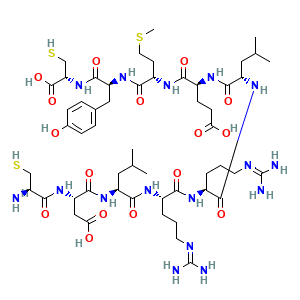 |
| CAS Number | 2227218-71-3 |
| Alias / Common Name | Decapeptide-4; CG-IDP2 |
| Molecular Formula | C53H88N16O16S3 |
| Molecular Weight | 1301.6 g/mol |
| INCI Name | Decapeptide-4 |
| Functional Class | Synthetic decapeptide; MMP-1/MMP-3 modulator; ECM protective active; anti-age firming peptide |
| Purity / Assay | ≥98% (HPLC); confirm by batch COA |
| Appearance | White to off-white powder |
| Solubility / Handling | Freely water-soluble; dissolve in deionised water or aqueous phase at ambient temperature; no co-solvent required |
| pH Stability | Optimal stability at pH 5.0–7.5; confirm in the complete formulation after all actives |
| Storage | Store sealed below 25°C in cool, dry, light-protected conditions; follow batch COA and SDS |
> Mechanism & Positioning
Decapeptide-4 (CG-IDP2, CAS 2227218-71-3) is a 10-residue synthetic peptide active designed to modulate matrix metalloproteinase (MMP) activity and support ECM structural integrity in aged and UV-stressed skin. Published Decapeptide-4 literature discusses MMP-1 (interstitial collagenase) and MMP-3 (stromelysin-1) pathway modulation — key enzymes responsible for collagen I, III and IV degradation in the dermis under UV irradiation and chronic inflammatory conditions. MMP-1 cleaves fibrillar collagens (type I, II, III) at a specific Gly-Ile/Leu peptide bond, initiating the collagen degradation cascade that contributes to dermal thinning and wrinkle deepening. Cell-based dermal fibroblast and keratinocyte studies document MMP-1 and MMP-3 expression reduction alongside pro-collagen I synthesis modulation in UV-challenged and chronologically aged skin model assay systems. ECM protection model data also notes elastin degradation pathway interaction and TIMP (tissue inhibitor of metalloproteinases) upregulation effects, consistent with full-spectrum MMP-pathway ECM protection positioning in anti-age serum formulation concepts.
Based on available in vitro data, Decapeptide-4 (CG-IDP2) is positioned for ECM-protective anti-age serum, UV-post-conditioning concentrate and advanced firming formulation concepts where MMP-1/MMP-3 pathway modulation and ECM structural protection are the primary mechanistic directions. The MMP-pathway protection mechanism is complementary to and independent from the collagen synthesis pathway of Matrixyl — providing both new collagen synthesis (Matrixyl) and protection of existing collagen from MMP-mediated degradation (Decapeptide-4) for multi-mechanism ECM anti-age architecture.
> Application Concepts
ECM-Protective Anti-Age Serum Architecture
Decapeptide-4 (CG-IDP2) dissolves freely in deionised water and aqueous serum bases at 0.001–0.01% (w/w) without co-solvent. Introduce during the cool-down phase below 45°C. For targeted ECM anti-age positioning — simultaneously promoting new collagen synthesis and protecting existing collagen from MMP degradation — combine Decapeptide-4 (MMP-1/MMP-3 modulation) with Matrixyl (TGF-β1 new collagen synthesis) and GHK-Cu (LOX crosslinking). The three-mechanism system covers: synthesis (Matrixyl) + protection (Decapeptide-4) + maturation/crosslinking (GHK-Cu) — a complete collagen lifecycle approach. All three are water-soluble and pH-compatible at 5.0–7.5. Confirm combined stability at 40°C/75% RH before scale-up.
UV-Post-Conditioning and Photoprotective Serum Integration
The UV-induced MMP-1/MMP-3 upregulation pathway makes Decapeptide-4 particularly relevant for UV-after-care and daily photoprotective serum concepts where post-UV collagen degradation attenuation is a claim direction. UV exposure stimulates AP-1 transcription factor-mediated MMP-1 and MMP-3 gene expression in both keratinocytes and fibroblasts within 24–48 hours — a key mechanism of solar-damage collagen degradation contributing to photoaging. At 0.001–0.01% in a UV-after-care serum or daily treatment, Decapeptide-4 provides MMP-pathway ECM protection alongside complementary antioxidant actives (Ergothioneine, Glutathione) for multi-active post-UV skin-quality maintenance. Combine with retinoid-free anti-age actives for sensitive-skin UV-after-care positioning. Confirm combined stability before production.
Anti-Age Premium Concentrate: MMP Protection + Synthesis Architecture
In premium anti-age concentrates, the most scientifically robust ECM positioning combines collagen synthesis support with MMP-mediated collagen protection — addressing both the anabolic (synthesis) and catabolic (degradation) arms of dermal collagen homeostasis simultaneously. Decapeptide-4 (MMP-1/MMP-3 protection) + Matrixyl (TGF-β1 collagen I/III synthesis) + Tripeptide-10 Citrulline (decorin fibril organisation) + GHK-Cu (LOX crosslinking) provides four-mechanism collagen lifecycle management in a single aqueous serum concentrate. All four actives are water-soluble and pH-compatible at 5.0–7.5. Confirm combined assay retention and stability at 40°C/75% RH before production scale-up.
> Handling & Formulation Notes
Dissolve Decapeptide-4 in deionised water or the aqueous phase at ambient temperature at 0.001–0.01% (w/w). Freely water-soluble at evaluation concentrations. The decapeptide contains Cys (disulfide) residues — assess compatibility with strongly reducing conditions. Introduce during cool-down below 45°C. Maintain pH within 5.0–7.5.
Evaluate compatibility with strongly reducing agents (DTT, ascorbic acid at high concentrations) that may affect disulfide-containing peptide integrity. Confirm peptide assay retention by HPLC after accelerated stability at 40°C/75% RH before production. Contact info@tcspeptides.com for batch COA with complete amino acid composition and disulfide bond status. EDTA at ≤0.1% is compatible as a chelating buffer; avoid strong oxidising agents (H₂O₂ ≥1%, benzoyl peroxide) and high-pH systems above pH 8.0.
> Supply & Documentation
Decapeptide-4 (CAS 2227218-71-3) is available from TCS NEXUS S.L. (Valencia, Spain) for B2B cosmetic raw material projects. Standard documentation: COA, TDS, SDS. Sample and bulk quantities are discussed on a per-project basis; contact info@tcspeptides.com to initiate a sourcing review.
TCS NEXUS S.L. supports procurement and formulation teams in Germany, France, Italy, Spain, the United Kingdom, the Netherlands, Belgium, Poland, Sweden and Portugal, as well as international buyers in the United States, Canada, Japan, South Korea, Australia and New Zealand.
> Packaging & Storage
Decapeptide-4 is supplied in sealed aluminium foil bags or bulk containers. Minimum quantities and packaging configurations are confirmed per order. Store below 25°C in a cool, dry location, away from moisture and direct light. Follow batch COA and SDS for specific storage and handling conditions.
> FAQ
What is Decapeptide-4?
Decapeptide-4 (CAS 2227218-71-3) is a cosmetic raw material supplied by TCS NEXUS S.L. (Valencia, Spain) for B2B cosmetic formulators. In cosmetic literature, Decapeptide-4 is positioned as a skin-brightening and texture-refining peptide active evaluated for reduction of age spot formation and improvement of skin luminosity in leave-on anti-ageing serums. TCS NEXUS S.L. supplies Decapeptide-4 as a pure synthetic decapeptide for B2B cosmetic formulators.
What is the CAS number for Decapeptide-4?
The CAS number for Decapeptide-4 is 2227218-71-3. The INCI name for cosmetic regulatory documentation and CPNP notification is Decapeptide-4; confirm CAS 2227218-71-3 and INCI identity against the batch COA when building product files.
How does Decapeptide-4 protect the matrix — what is the MMP mechanism?
Decapeptide-4 (CG-IDP2) is a ten-amino-acid peptide positioned to protect the extracellular matrix by moderating matrix-metalloproteinase activity, particularly MMP-1 (collagenase) and MMP-3. By tempering the enzymes that break collagen and matrix down — rather than only stimulating new synthesis — it is framed for firmness preservation and anti-age claim directions.
What use level of Decapeptide-4 is typical, and how should it be evaluated?
Because the effective level shifts with formulation and claim, build it up conservatively from your own evaluation instead of fixing on one number; it is often a trade solution, so confirm your dosing basis. We supply the pure material with COA — contact info@tcspeptides.com to align documentation.
Which actives pair with Decapeptide-4 in a build-and-protect system?
Decapeptide-4 protects the matrix, so it complements peptides that build it — Matrixyl, Palmitoyl Tripeptide-1 and GHK-Cu — giving a “build and protect” pairing, and it combines with antioxidants and niacinamide. It is water-soluble; confirm combined stability and pH in the finished base.
What makes Decapeptide-4 distinct — matrix protection via MMP control?
Its distinctive angle is protection rather than stimulation: by moderating MMP-1 and MMP-3 it helps preserve existing collagen and matrix, complementing synthesis-driven peptides that build new matrix. Pairing protection with building is the rationale for using it in a firmness system. Decapeptide-4 is freely water-soluble.
What addition temperature is recommended for Decapeptide-4 during manufacturing?
Introduce Decapeptide-4 during the cool-down phase at temperatures below 45°C; avoid prolonged exposure above this threshold. Standard aqueous or emulsion cool-down protocols are fully compatible with this addition requirement. Confirm thermal stability in the specific manufacturing process with accelerated stability data before committing to production scale.
What pH range keeps Decapeptide-4 stable in a finished formula?
Decapeptide-4 is most stable at roughly pH 4.5–7.0; confirm the finished-product pH after all actives are incorporated and evaluate combined stability with low-pH actives such as ascorbic acid.
Is Decapeptide-4 compatible with other actives in multi-active cosmetic systems?
Decapeptide-4 is compatible with standard cosmetic actives at pH 5.0–7.5 in aqueous or emulsion systems. Evaluate combined system pH drift, clarity and assay retention; confirm preservative compatibility. Run accelerated stability testing at 40°C/75% RH before scale-up.
Is Decapeptide-4 (INCI) compliant with EU Cosmetics Regulation 1223/2009?
Decapeptide-4 is not listed as a restricted, prohibited or regulated substance under EU Cosmetics Regulation 1223/2009 Annexes II–VI. The finished product manufacturer is responsible for the CPSR and CPNP notification. Use CAS 2227218-71-3 and INCI name Decapeptide-4 consistently in all regulatory documentation; confirm purity and identity against the batch COA.
How should Decapeptide-4 be stored?
Store Decapeptide-4 sealed below 25°C in a cool, dry location protected from direct light and moisture. Once opened, reseal the container immediately. Follow specific storage and handling conditions stated in the SDS and batch COA. Confirm shelf life for the specific batch before incorporating into production formulations.
What documentation does TCS NEXUS S.L. provide for Decapeptide-4?
TCS NEXUS S.L. provides COA (confirming CAS 2227218-71-3 and HPLC purity ≥98% (HPLC)), TDS (Technical Data Sheet) and SDS (Safety Data Sheet) for Decapeptide-4. Additional documentation such as specification sheets and INCI confirmation letters is available on a per-project basis. Contact info@tcspeptides.com to initiate a documentation and sourcing discussion.
What MOQ and sample options are available for Decapeptide-4?
Sample and bulk quantities for Decapeptide-4 are confirmed on a per-project basis through TCS NEXUS S.L. Minimum order quantities depend on current stock, packaging configuration and project scope. R&D teams are encouraged to request samples for stability and concentration-range evaluation before bulk planning. Contact info@tcspeptides.com with project specification to begin a sourcing review.
> Technical Support and Samples
Request COA documents, sample availability, or support for custom synthesis.