
Nonapeptide-1 (Melitane) (CAS 158563-45-2) is supplied by TCS NEXUS S.L. (Valencia, Spain) for European cosmetic formulators, brand R&D teams and B2B buyers reviewing tone-care, even-tone and radiance-oriented raw material applications. The 9-amino acid peptide sequence is designed to interact with the melanocortin 1 receptor (MC1R) pathway in melanocyte-based model systems, enabling positioning as a tone-care active in aqueous serum, emulsion and leave-on concentrate formats at 50–500 ppm (0.005–0.05%) in aqueous systems at pH 4.5–7.0.
> Technical Specifications
| Product Name | Nonapeptide-1 |
|---|---|
| Molecular Structure | 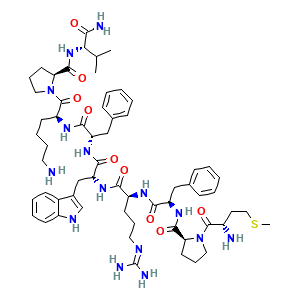 |
| CAS Number | 158563-45-2 |
| Alias / Common Name | Melitane; Melanostatine 5; White 05; Nonapeptide-1 |
| Molecular Formula | C61H87N15O9S |
| Molecular Weight | 1206.5 g/mol |
| INCI Name | Nonapeptide-1 |
| Peptide Structure | 9-amino acid peptide (MC1R-pathway modulating sequence); confirm identity by batch COA |
| Purity / Assay | ≥98% (HPLC); confirm by batch COA |
| Appearance | White to off-white powder |
| Solubility / Handling | Freely water-soluble; dissolve in water or aqueous phase before incorporation; confirm clarity in the target base |
| pH Stability | Review across pH 4.5–7.0 leave-on cosmetic systems; confirm in target base |
| Storage | Store sealed in cool, dry conditions protected from direct light and moisture; follow batch COA and SDS |
> Mechanism & Positioning
Nonapeptide-1 is a 9-amino acid peptide designed to interact with the melanocortin 1 receptor (MC1R) — the G-protein-coupled receptor on melanocytes that, when activated by α-melanocyte-stimulating hormone (α-MSH), triggers the cAMP/PKA/MITF signalling cascade leading to tyrosinase upregulation and melanin synthesis. Published Nonapeptide-1 literature discusses that the peptide can competitively interact with MC1R in melanocyte model systems, attenuating the receptor-mediated signal that drives melanogenesis. Cell-based studies document modulation of tyrosinase activity and cAMP accumulation in melanocyte-based assay systems treated with Nonapeptide-1, consistent with MC1R pathway interference at the receptor level. In vitro melanocyte model data also notes reduction in melanin content measurements in cell assays when Nonapeptide-1 is applied, supporting the tone-care positioning discussed in cosmetic application literature.
Based on available in vitro melanocyte data, Nonapeptide-1 is positioned for aqueous tone-care serum, even-tone emulsion and radiance-oriented multi-active cosmetic applications. The MC1R-receptor interaction mechanism differentiates Nonapeptide-1 from enzymatic melanogenesis inhibitors (tyrosinase inhibitors such as kojic acid or ascorbic acid derivatives) by targeting the upstream G-protein-coupled signalling step rather than the enzyme itself, enabling complementary pathway positioning in multi-active tone-care formulation architecture. Nonapeptide-1 may be evaluated alongside Hexapeptide-2 (MC1R/POMC downregulation, complementary receptor-level pathway) for dual MC1R-targeting tone-care positioning, or with L-Glutathione (GSH) for antioxidant-complemented even-tone positioning in aqueous serum systems.
> Application Concepts
Aqueous Serum and Even-Tone Concentrate Architecture
Nonapeptide-1 is freely water-soluble and dissolves directly in water or the aqueous phase without co-solvent or glycol pre-mix. At pH 4.5–7.0, it integrates readily into glycerin–water serum bases, hyaluronic acid concentrates and niacinamide serums. Introduce during the aqueous phase build or cool-down stage below 40°C. The water-soluble profile makes Nonapeptide-1 a clean addition to clear or lightly textured tone-care serums where formulation aesthetics are a priority. Confirm clarity, pH and assay retention in the target base under accelerated stability conditions before scale-up.
Radiance-Positioned Multi-Active Systems
For multi-mechanism even-tone positioning, Nonapeptide-1 (MC1R pathway modulation) may be evaluated alongside L-Glutathione (GSH) (antioxidant and melanin synthesis modulation via GSH-pheomelanin pathway shift) and niacinamide (melanin transfer inhibition between melanocytes and keratinocytes) to address three distinct levels of melanogenesis: receptor signalling, antioxidant quenching and transfer inhibition. Verify pH compatibility (niacinamide systems are typically pH 5.0–6.5; ascorbic acid systems may require separate step-down strategies), assay retention and colour stability in the combined system before proceeding to scale-up.
Even-Tone Emulsion and Cushion-Format Positioning
Nonapeptide-1 integrates into O/W emulsions, BB/CC cream formats and cushion foundation bases as an aqueous-phase addition at 50–500 ppm (0.005–0.05%). The water-soluble peptide requires no glycol carrier and introduces no additional solvent to the emulsion system. Confirm interaction with titanium dioxide, zinc oxide and iron oxide pigment systems commonly used in tone-adjusting formats — evaluate zeta potential effects on dispersion stability. For leave-on emulsions, confirm preservative efficacy and pH in the complete formulation including all actives, pigments and rheology modifiers before scale-up.
> Handling & Formulation Notes
Dissolve Nonapeptide-1 in water or the aqueous phase at ambient temperature or up to 40°C. The peptide is freely water-soluble at typical cosmetic evaluation concentrations of 50–500 ppm (0.005–0.05%) and does not require co-solvent or surfactant pre-dispersion. Introduce during the cool-down stage below 40°C; avoid prolonged exposure above 45°C to minimise risk of peptide bond hydrolysis at elevated temperature. Nonapeptide-1 is stable across pH 4.5–7.0 in leave-on cosmetic systems; confirm pH in the complete formulation after all actives and buffering agents are incorporated.
Evaluate compatibility with vitamin C (ascorbic acid) systems at low pH — reducing conditions may affect sensitive amino acid residues in the peptide sequence over the shelf-life period. Confirm colour, clarity, assay retention and pH stability via accelerated stability testing across the intended shelf-life at 40°C/75% RH. Niacinamide compatibility at 5–10% in the base should be confirmed, as high niacinamide concentrations at acidic pH can generate nicotinic acid by-products that interact with certain peptide systems. EDTA at ≤0.1% is compatible as a chelating buffer; avoid strong oxidising agents (H₂O₂ ≥1%, benzoyl peroxide) and high-pH systems above pH 8.0.
> Supply & Documentation
Nonapeptide-1 (Melitane) (CAS 158563-45-2) is available from TCS NEXUS S.L. (Valencia, Spain) for B2B cosmetic raw material projects. Standard documentation: COA, TDS, SDS. Sample and bulk quantities are discussed on a per-project basis; contact info@tcspeptides.com to initiate a sourcing review.
TCS NEXUS S.L. supports procurement and formulation teams in Germany, France, Italy, Spain, the United Kingdom, the Netherlands, Belgium, Poland, Sweden and Portugal, as well as international buyers in the United States, Canada, Japan, South Korea, Australia and New Zealand.
> Packaging & Storage
Nonapeptide-1 is supplied in sealed aluminium foil bags or bulk containers. Minimum quantities and packaging configurations are confirmed per order. Store below 25°C in a cool, dry location protected from light and moisture. Follow batch COA and SDS for specific storage and handling conditions.
> FAQ
What is Nonapeptide-1 (Melitane)?
Nonapeptide-1 (Melitane) (CAS 158563-45-2) is a 9-amino acid peptide raw material designed to interact with the melanocortin 1 receptor (MC1R) pathway in melanocyte-based model systems. TCS NEXUS S.L. (Valencia, Spain) supplies Nonapeptide-1 as a B2B cosmetic ingredient for tone-care, even-tone and radiance-oriented serum, emulsion and multi-active applications.
What is the CAS number for Nonapeptide-1 and what does “Melitane” mean?
The CAS number for Nonapeptide-1 is 158563-45-2. Melitane was the trade name used by Sederma for their Nonapeptide-1 product positioned as a melanin-regulation peptide. Melanostatine 5 and White 05 are other commercial names encountered in sourcing documentation. For regulatory documentation and CPNP notification, use the INCI name Nonapeptide-1 and CAS 158563-45-2 consistently. Confirm identity by batch COA from the supplier.
How does Nonapeptide-1 (Melitane) even skin tone — what is the MC1R mechanism?
Nonapeptide-1 (Melitane, also Melanostatine-5) is a nonapeptide α-MSH antagonist: it competes with alpha-melanocyte-stimulating hormone at the melanocortin-1 receptor (MC1R) on melanocytes, so the “make melanin” signal is dampened before tyrosinase is even switched on. Working upstream at the receptor-signalling step positions it for even-tone, brightening and dark-spot-appearance claim directions.
How does Nonapeptide-1 differ from tyrosinase inhibitors like kojic acid or ascorbic acid?
Nonapeptide-1 targets the upstream MC1R receptor-signalling step in melanogenesis — modulating the G-protein-coupled receptor that initiates the cascade, rather than the tyrosinase enzyme itself. Enzymatic inhibitors (kojic acid, ascorbic acid, arbutin) act downstream at the tyrosinase catalytic site to prevent DOPA oxidation. This mechanistic difference makes Nonapeptide-1 and tyrosinase inhibitors complementary in multi-active even-tone formulations designed to address melanogenesis at both the signalling initiation and enzymatic catalysis levels.
What use level of Nonapeptide-1 is typical, and how should it be evaluated?
Treat the use level as project-specific and establish it conservatively for your base and claim rather than to a fixed figure; it is commonly a diluted trade solution, so confirm your dosing basis. We supply the pure material with COA — contact info@tcspeptides.com to align documentation.
What actives combine well with Nonapeptide-1 in multi-active tone-care systems?
Nonapeptide-1 (MC1R pathway modulation) builds multi-mechanism even-tone systems with three distinct actives: L-Glutathione (GSH) — antioxidant and melanin synthesis modulation via GSH-mediated pheomelanin shift; niacinamide (vitamin B3) — melanin transfer inhibition from melanocytes to keratinocytes; and ascorbic acid (vitamin C) — tyrosinase enzymatic inhibition and antioxidant protection. Verify pH compatibility across all actives (niacinamide systems work at pH 5.0–6.5; ascorbic acid requires pH 2.5–4.0 for stability), and confirm assay retention of the peptide across the shelf-life period.
Is Nonapeptide-1 water-soluble, and how does it relate to Hexapeptide-2 (Melanostatine)?
Nonapeptide-1 is freely water-soluble and dissolves directly in the aqueous phase. Like Hexapeptide-2 (Melanostatine-2) it acts at the MC1R receptor step rather than on tyrosinase — the two are related MC1R-pathway brighteners (Melanostatine-5 vs Melanostatine-2) that can be chosen by formulation brief, and both complement downstream tyrosinase inhibitors in a multi-target tone system.
What pH range keeps Nonapeptide-1 stable in a brightening formula?
Nonapeptide-1 is most stable at roughly pH 4.5–7.0, overlapping well with niacinamide and alpha-arbutin; confirm the finished-product pH after all actives are incorporated and check compatibility where the base also carries low-pH actives such as vitamin C.
What addition temperature is recommended for Nonapeptide-1 during manufacturing?
Introduce Nonapeptide-1 during the cool-down phase at temperatures below 40°C. Prolonged exposure above 45°C introduces risk of peptide bond hydrolysis. For aqueous serums and emulsions, dissolve in the water phase at ambient temperature and add to the batch during cool-down. Confirm thermal stability in the specific manufacturing process using accelerated stability data before committing to production scale.
How should Nonapeptide-1 be stored?
Store Nonapeptide-1 sealed below 25°C in a cool, dry location protected from direct light and moisture. Once opened, reseal immediately and use within a defined period confirmed by the batch COA. Follow specific storage and handling conditions stated in the SDS.
What documentation does TCS NEXUS S.L. provide for Nonapeptide-1?
TCS NEXUS S.L. provides standard B2B documentation for Nonapeptide-1 including COA (confirming CAS 158563-45-2, HPLC purity ≥98%), TDS (Technical Data Sheet) and SDS (Safety Data Sheet). Additional documentation such as specification sheets and INCI confirmation letters are available on a per-project basis. Contact info@tcspeptides.com to initiate a documentation and sourcing discussion.
What MOQ and sample options are available for Nonapeptide-1?
Sample and bulk quantities are confirmed on a per-project basis through TCS NEXUS S.L. Minimum order quantities depend on current stock, packaging configuration and project scope. R&D teams are encouraged to request samples for stability and compatibility evaluation before bulk planning. Contact info@tcspeptides.com with project scope and specification to begin a sourcing review.
Is Nonapeptide-1 (INCI) compliant with EU Cosmetics Regulation 1223/2009?
Nonapeptide-1 is not listed as a restricted, prohibited or regulated substance under EU Cosmetics Regulation 1223/2009 Annexes II–VI. The finished product manufacturer is responsible for confirming compliance, including the CPSR and CPNP notification. Use CAS 158563-45-2 and INCI name Nonapeptide-1 consistently in regulatory documentation; confirm purity and identity with the batch COA.
> Technical Support and Samples
Request COA documents, sample availability, or support for custom synthesis.