
Glutathione (GSH) (CAS 70-18-8) is supplied by TCS NEXUS S.L. (Valencia, Spain) for European cosmetic formulators, brand R&D teams and B2B buyers reviewing cosmetic peptide raw material applications. A freely water-soluble peptide, it dissolves directly in aqueous concentrates without co-solvents at pH 4.5–6.5, with cool-down addition below 40°C recommended in standard serum and leave-on manufacturing protocols.
> Technical Specifications
| Product Name | Glutathione (GSH) |
|---|---|
| Molecular Structure | 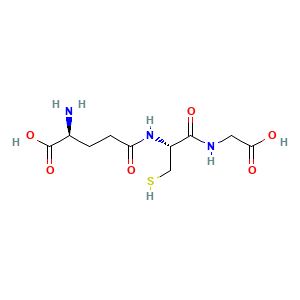 |
| CAS Number | 70-18-8 |
| Alias / Common Name | GSH; Reduced glutathione; L-Glutathione reduced; gamma-L-Glutamyl-L-cysteinylglycine |
| Molecular Formula | C10H17N3O6S |
| Molecular Weight | 307.33 g/mol |
| INCI Name | Glutathione |
| Functional Class | Tripeptide antioxidant; cellular reducing agent; GPx/GR enzyme substrate; anti-melanogenic active |
| Purity / Assay | ≥98% (HPLC); confirm by batch COA |
| Appearance | White to off-white hygroscopic powder |
| Solubility / Handling | Freely water-soluble; dissolve in deionised water at ambient temperature; nitrogen-blanket or low-oxygen dissolution recommended to minimise oxidation |
| pH Stability | Optimal stability at pH 4.0–7.0 in aqueous systems; most stable under slightly acidic conditions (pH 4.5–6.0); avoid alkaline pH above 8.0 |
| Storage | Store sealed below −20°C under inert atmosphere (nitrogen or argon) to prevent oxidation; hygroscopic — reseal immediately; follow batch COA and SDS for specific conditions |
> Mechanism & Positioning
Glutathione (GSH, CAS 70-18-8) is the endogenous γ-Glu-Cys-Gly tripeptide that functions as the primary intracellular reducing agent in skin cells, operating as the main substrate for glutathione peroxidase (GPx) and glutathione S-transferase (GST) enzyme systems responsible for peroxide detoxification and electrophile conjugation. Published Glutathione literature discusses ROS scavenging — primarily hydrogen peroxide (H₂O₂) and lipid hydroperoxide — via GPx-catalysed reduction, generating oxidised glutathione (GSSG), which is recycled to GSH by glutathione reductase (GR) in a NADPH-dependent cycle. Cell-based keratinocyte and melanocyte studies document anti-melanogenic activity associated with GSH-driven tyrosinase pathway modulation: reduced GSH shifts melanin synthesis towards the pheomelanin (lighter pigment) route, attenuating eumelanin production in melanocyte assay systems under oxidative challenge. Brightening model data also notes the role of GSH in protecting melanocytes and keratinocytes against UV-induced oxidative DNA damage and lipid peroxidation, providing a dual antioxidant–brightening mechanistic rationale in cosmetic positioning.
Based on available in vitro data, Glutathione (GSH) is positioned for brightening serum, antioxidant concentrate, UV-after-care and oxidative-stress-protection formulation concepts. The free reduced GSH form has limited stability in oxidising formulation environments — combine with antioxidant system (vitamin C, vitamin E) and pH control at 4.5–6.5 to preserve activity. For complementary antioxidant positioning, GSH combines with Ergothioneine (TAUT-transported superantioxidant) and Ectoin (extremolyte barrier stabilisation) for multi-mechanism antioxidant serum architecture.
> Application Concepts
Brightening Serum and Antioxidant Concentrate Architecture
Glutathione (GSH) dissolves freely in deionised water or glycerin–water at 0.05–2.0% (w/w) for brightening serum, vitamin C synergy concentrate or antioxidant toner applications. Dissolve under nitrogen or low-oxygen conditions to minimise pre-formulation oxidation of the thiol group. Introduce during the cool-down phase below 40°C in an oxygen-limited environment; consider nitrogen sparging of the batch during cool-down. Formulate at pH 4.5–6.5 for optimal GSH stability; avoid alkaline pH above 7.0. Package in airless pump or nitrogen-flushed tube format to limit post-manufacture oxidative exposure. Confirm residual GSH content via HPLC after forced oxidation studies (40°C/75% RH, 6 weeks) before finalising the antioxidant system design.
Brightening Mechanism and Anti-Melanogenic Serum Design
The anti-melanogenic positioning of Glutathione in brightening serums rests on its role in the melanin synthesis pathway switch. In melanocytes under oxidative stress or after UV exposure, GSH competes with the melanin biosynthesis cascade at the DOPA-quinone reactive intermediate stage, favouring pheomelanin (yellow-red, lighter pigment) formation over eumelanin (brown-black). At GSH concentrations of 0.05–2.0% in the formulation, sufficient GSH must reach the melanocyte — penetration enhancement (glycol, ethosome, liposome delivery) may support bioavailability. Combine with vitamin C (L-ascorbic acid at 5–15%) for tyrosinase inhibition and GSH regeneration support; combine with niacinamide for melanosome transfer inhibition. Confirm combined pH stability (typically pH 3.0–4.0 for ascorbic acid vs pH 4.5–6.5 for GSH) before scale-up.
UV-After-Care and Oxidative Stress Protection Formulations
Glutathione’s role in GPx-mediated peroxide detoxification and DNA oxidative damage repair makes it relevant for UV-after-care lotion, post-procedure concentrate and environmental pollution shield formulations. At 0.05–2.0% in an emulsion or serum base, GSH provides free radical scavenging alongside antioxidant enzyme-system substrate replenishment — a different mechanism from lipid-soluble antioxidants (vitamin E, ferulic acid) operating in the membrane phase. Combine with Ergothioneine and L-Carnosine for three-mechanism aqueous antioxidant architecture covering GPx-pathway (GSH), TAUT-transported intracellular defence (Ergothioneine) and metal-chelation/anti-glycation (Carnosine). Package in nitrogen-flushed airless format for maximum stability.
> Handling & Formulation Notes
Dissolve Glutathione (GSH) in deionised water or the aqueous phase under nitrogen or low-oxygen conditions at 0.05–2.0% (w/w) at ambient temperature. The free thiol (—SH) group is sensitive to oxidation by atmospheric oxygen — work quickly, use nitrogen-sparged water and introduce into the formulation during a nitrogen-blanketed cool-down phase below 40°C. Maintain pH within 4.5–6.5; avoid alkaline pH above 7.0, which accelerates thiol oxidation.
Do not combine with strong oxidising agents, high concentrations of transition metals (iron, copper) without chelation, or prolonged exposure to air at elevated temperatures. Package in airless or nitrogen-flushed containers. Confirm residual GSH content by HPLC after stability protocols before committing to production batches. For formulations where oxidation stability is challenging, consider Glutathione Oxidized (GSSG) as a complementary brightening active with distinct chemistry.
> Supply & Documentation
Glutathione (GSH) (CAS 70-18-8) is available from TCS NEXUS S.L. (Valencia, Spain) for B2B cosmetic raw material projects. Standard documentation: COA, TDS, SDS. Sample and bulk quantities are discussed on a per-project basis; contact info@tcspeptides.com to initiate a sourcing review.
TCS NEXUS S.L. supports procurement and formulation teams across the EU, including Germany, France, Italy, Spain, the Netherlands, Belgium, Poland, Sweden, Denmark and Portugal, as well as international buyers in South Korea, Japan and other markets.
> Packaging & Storage
Glutathione (GSH) is supplied in sealed aluminium foil bags or bulk containers, nitrogen-flushed where available. Minimum quantities and packaging configurations are confirmed per order. Store below 25°C in a cool, dry, low-oxygen environment. The free thiol (—SH) group is sensitive to atmospheric oxidation — store in sealed containers and minimise air exposure on opening. Follow batch COA and SDS for specific storage and handling conditions.
> FAQ
What is Glutathione (GSH)?
Glutathione (GSH) (CAS 70-18-8) is a cosmetic raw material supplied by TCS NEXUS S.L. (Valencia, Spain) for B2B cosmetic formulators. It is positioned for brightening serum, antioxidant concentrate, UV-after-care and oxidative-stress-protection formulation concepts where GPx-pathway ROS scavenging and melanin synthesis modulation are the claim directions.
What is the CAS number for Glutathione (GSH)?
The CAS number for Glutathione (GSH) is 70-18-8. The INCI name for cosmetic regulatory documentation and CPNP notification is Glutathione; confirm CAS 70-18-8 and INCI identity against the batch COA when building product files.
How does Glutathione (GSH) work at a molecular level?
GSH scavenges reactive oxygen species primarily via GPx-catalysed reduction of H₂O₂ and lipid hydroperoxides, generating oxidised glutathione (GSSG) that is recycled by glutathione reductase in a NADPH-dependent cycle. In melanocytes under oxidative stress, GSH shifts melanin synthesis towards pheomelanin (lighter pigment) by competing with the DOPA-quinone reactive intermediate, attenuating eumelanin production — the mechanistic basis for brightening positioning at 0.05–2.0%.
What concentration range should be evaluated for Glutathione (GSH)?
Formulation literature positions Glutathione (GSH) evaluation at 0.05–2.0% (w/w) in aqueous serum and leave-on systems. The appropriate use level depends on the complete formulation system, stability protocol and claim direction. TCS NEXUS S.L. confirms evaluation ranges per project scope; contact info@tcspeptides.com with project specification.
What actives combine well with Glutathione (GSH)?
GSH combines with vitamin C (L-ascorbic acid 5–15%) for synergistic brightening: ascorbic acid inhibits tyrosinase and regenerates GSH from GSSG. Adding Ergothioneine (EGT) extends antioxidant coverage through the complementary TAUT-transported intracellular pathway, while Ectoin provides membrane-stabilisation against UV-induced oxidative damage — three distinct antioxidant mechanisms in one serum concentrate.
Is Glutathione (GSH) water-soluble or oil-soluble?
Glutathione (GSH) is freely water-soluble, dissolving readily in deionised water or the aqueous phase at typical evaluation concentrations (0.05–2.0%) without co-solvent or glycol pre-mix. To minimise pre-dissolution oxidation of the free thiol group, dissolve using nitrogen-sparged water or in a low-oxygen environment. Confirm residual GSH content after dissolution by HPLC before incorporating into formulation. Airless or nitrogen-flushed packaging is recommended for finished formulations.
What addition temperature is recommended for Glutathione (GSH) during manufacturing?
Introduce Glutathione (GSH) during the cool-down phase at temperatures below 40°C; avoid prolonged exposure above this threshold. Standard aqueous or emulsion cool-down protocols are fully compatible with this addition requirement. Confirm thermal stability in the specific manufacturing process with accelerated stability data before committing to production scale.
What pH range is optimal for Glutathione (GSH) stability?
Glutathione (GSH) shows optimal stability at pH 4.5–6.5 in aqueous cosmetic systems, covering typical serum, toner and leave-on emulsion pH targets. Evaluate stability in the complete formulation base, particularly when combining with acidic actives. Confirm final pH after all actives and buffering agents are incorporated.
Is Glutathione (GSH) compatible with other actives in multi-active cosmetic systems?
Glutathione (GSH) is compatible with niacinamide, vitamin E, ferulic acid and peptide actives at pH 4.5–6.5. Avoid combination with strongly oxidising actives (high-dose hydrogen peroxide systems, benzoyl peroxide) and high concentrations of transition metals (iron, copper) without chelation — these will rapidly oxidise the free thiol group. Evaluate clarity and residual GSH by HPLC after any multi-active combination.
Is Glutathione (INCI) compliant with EU Cosmetics Regulation 1223/2009?
Glutathione is not listed as a restricted, prohibited or regulated substance under EU Cosmetics Regulation 1223/2009 Annexes II–VI. The finished product manufacturer is responsible for the CPSR and CPNP notification. Use CAS 70-18-8 and INCI name Glutathione consistently in all regulatory documentation; confirm purity and identity against the batch COA.
How should Glutathione (GSH) be stored?
Store Glutathione (GSH) sealed below 25°C in a cool, dry location protected from direct light and moisture. Once opened, reseal the container immediately. Follow specific storage and handling conditions stated in the SDS and batch COA. Confirm shelf life for the specific batch before incorporating into production formulations.
What documentation does TCS NEXUS S.L. provide for Glutathione (GSH)?
TCS NEXUS S.L. provides COA (confirming CAS 70-18-8 and HPLC purity ≥98% (HPLC)), TDS (Technical Data Sheet) and SDS (Safety Data Sheet) for Glutathione (GSH). Additional documentation such as specification sheets and INCI confirmation letters is available on a per-project basis. Contact info@tcspeptides.com to initiate a documentation and sourcing discussion.
What MOQ and sample options are available for Glutathione (GSH)?
Sample and bulk quantities for Glutathione (GSH) are confirmed on a per-project basis through TCS NEXUS S.L. Minimum order quantities depend on current stock, packaging configuration and project scope. R&D teams are encouraged to request samples for stability and concentration-range evaluation before bulk planning. Contact info@tcspeptides.com with project specification to begin a sourcing review.
How do buyers in Germany, France, Netherlands and Belgium search for Glutathione (GSH) raw material?
German procurement searches “Glutathion GSH Lieferant Europa”, “reduziertes Glutathion Rohstoff” or “CAS 70-18-8 Lieferant”. French teams use “Glutathion réduit fournisseur Europe” or “GSH ingrédient cosmétique CAS 70-18-8”. Benelux buyers search “Glutathione GSH supplier Europe”, “reduced glutathione raw material” or “CAS 70-18-8 supplier”. TCS NEXUS S.L. supplies all four markets from Valencia with COA, TDS and SDS documentation.
How do Korean, Japanese, Spanish and Italian buyers search for Glutathione (GSH)?
Korean buyers search “글루타치온 GSH 원료 공급업체” or “CAS 70-18-8 화장품 원료”. Japanese buyers use “グルタチオン 化粧品原料” or “CAS 70-18-8 サプライヤー”. Spanish formulators search “Glutatión GSH proveedor Europa” or “L-glutatión reducido materia prima”. Italian buyers use “Glutatione GSH fornitore Europa”. TCS NEXUS S.L. supplies all markets via info@tcspeptides.com.
How do buyers in Poland, the Nordics and Portugal source Glutathione (GSH) for cosmetic R&D?
Polish cosmetic formulators and procurement teams search “Glutathione (GSH) składnik kosmetyczny dostawca Europa” or “CAS 70-18-8 dostawca” on Polish B2B portals. Nordic buyers (Denmark, Sweden, Norway, Finland) typically search in English — “Glutathione (GSH) supplier Europe” or “CAS 70-18-8 cosmetic ingredient” — and prioritise EU-compliant documentation and Scandinavian logistics capacity. Portuguese formulators search “Glutathione (GSH) ingrediente cosmético fornecedor Europa” or use the English term alongside CAS 70-18-8. Brazilian cosmetic buyers search “Glutatión GSH ingrediente cosmético” or the English equivalent alongside CAS 70-18-8. TCS NEXUS S.L. (Valencia, Spain) supplies all these markets with full documentation — COA, TDS, SDS — and EU-based logistics. Contact info@tcspeptides.com.
> Technical Support and Samples
Request COA documents, sample availability, or support for custom synthesis.