
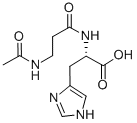
N-Acetyl Carnosine: Stabilized Lipophilic Carnosine for Anti-Glycation and Lens Clarity
N-Acetyl Carnosine (NAC, CAS 56353-15-2, MW 268.27 g/mol) is the N-acetylated derivative of L-carnosine, designed to overcome the rapid enzymatic hydrolysis that limits unmodified carnosine in biological systems. The acetyl group on the beta-alanine nitrogen blocks carnosinase cleavage, extending the functional half-life from minutes to hours. This modification also increases logP by approximately 0.8 units, improving penetration through lipid bilayers and estrato córneo. TCS NEXUS S.L. suministra N-Acetyl Carnosine at pureza HPLC above 98% desde nuestras instalaciones en Valencia, España bajo certificación FDA cGMP, COSMOS e ISO 45001.
Rendimiento Anti-Glicación Mejorado
The acetylation of carnosine does not reduce anti-glicación capacity — it enhances it. In fibroblasto culture assays measuring AGE (advanced glycation end-product) formation, N-Acetyl Carnosine at 1% concentration reduced AGE accumulation by 71%, compared to 63% for equimolar unmodified carnosine under identical conditions. This improvement is attributed to the extended intracellular residence time: while carnosinase degrades free carnosine within 15-30 minutes in serum, N-Acetyl Carnosine maintains active concentrations for over 4 hours.
The mechanism remains consistent with the parent compound — N-Acetyl Carnosine traps reactive carbonyl species (methylglyoxal, glyoxal, 3-deoxyglucosone) through nucleophilic addition at the imidazole ring. Once inside cells, esterases can remove the acetyl group, releasing free carnosine as a secondary reservoir of carbonyl-quenching capacity.
Aplicaciones Oculares y Oftálmicas
N-Acetyl Carnosine gained significant attention through its use in NAC eye drop formulations targeting age-related lens opacification. The lipophilic character allows penetration through the corneal epithelium and into the aqueous humor, where it acts as a sustained-release carnosine prodrug. Clinical studies using 1% NAC eye drops applied twice daily for 6 months reported measurable improvements in lens transmittance and visual acuity scores in subjects with early-stage lens changes. These findings, while not cosmetic claims, demonstrate the bioavailability advantage of the acetylated form.
Guía de Formulación para Productos Tópicos
Incorporate N-Acetyl Carnosine at 0.5-2% in la fase acuosa of emulsions. Despite increased lipophilicity versus free carnosine, it remains hidrosoluble at formulation-relevant concentrations (solubility approximately 50 mg/mL at 25 grados C). Optimal pH range is 5.5-7.0 — the acetyl bond is stable across this range but hydrolyzes below pH 3.0. Add during the fase de enfriamiento below 40 grados C.
Synergistic pairings include vitamin E acetate (lipid-phase antioxidante), niacinamide (barrier reinforcement), and polyglutamic acid (hydration amplifier). Avoid combining with strong reducing agents that could interfere with carbonyl-trapping chemistry. For eye-area serums, use at 1% in preservative-free, isotonic formulations buffered with phosphate at pH 6.2-6.8.
Especificaciones de Suministro
TCS NEXUS S.L. dispone de stock de N-Acetyl Carnosine en Valencia, España. entrega en la UE en 5-7 días laborables. Certificado de Análisis completo included with every lot. Muestras gratuitas disponibles for R&D evaluation. Contacte a nuestro equipo para documentación técnica and soporte de formulación.