
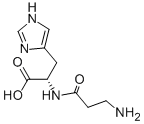
L-Carnosine: Free Base Anti-Glycation Dipeptide for Skin Firmness and Protection
L-Carnosine (CAS 305-84-0, MW 226.23 g/mol) is the free base form of beta-alanyl-L-histidine, a naturally occurring dipeptide concentrated in skeletal muscle, cardiac tissue, and the central nervous system. As the non-salt form of carnosine, L-Carnosine offers formuladores a different solubility and stability profile compared to the hydrochloride salt (Carnosine HCl, CAS 5765-44-6). TCS NEXUS S.L. suministra L-Carnosine at pureza HPLC above 98.5% desde nuestras instalaciones en Valencia, España, manufactured bajo certificación FDA cGMP, COSMOS e ISO 45001.
Mecanismo de Acción: Anti-Glycation and Carbonyl Quenching
Glycation is a non-enzymatic reaction between reducing sugars and amino groups on proteins, producing advanced glycation end-products (AGEs) that cross-link collagen and elastin fibers. This process accelerates with age, UV exposure, and elevated blood glucose, resulting in measurable loss of dermal elasticity and increased skin stiffness. L-Carnosine acts as a sacrificial nucleophile — its imidazole ring and amino group react with reactive carbonyl species (methylglyoxal, glyoxal) before they can modify structural proteins.
In fibroblasto culture models, L-Carnosine at 5 mM concentration reduced AGE-modified collagen accumulation by 63% over 14 days. The dipeptide also chelates divalent metal ions (Cu2+, Zn2+), reducing Fenton-type hydroxyl radical generation. This dual mechanism — carbonyl trapping plus metal chelation — makes L-Carnosine effective across both oxidative and glycative stress pathways.
Base Libre vs. Sal HCl: Comparación Técnica
L-Carnosine free base differs from Carnosine HCl in several formulation-relevant ways. The free base has a peso molecular of 226.23 versus 262.69 for the HCl salt, meaning molar concentration is approximately 16% higher at the same weight percentage. However, the free base is less stable in aqueous solution, particularly above pH 7.0, where hydrolysis by serum carnosinase accelerates. Aqueous solubility is slightly lower than the HCl salt at approximately 100 mg/mL versus 125 mg/mL at 25 grados C.
For anhydrous or low-water formulations (oils, anhydrous serums, pressed powders), the free base form is preferred because chloride counterions are unnecessary and the reduced hygroscopicity improves powder stability. In water-based serums, the HCl salt dissolves faster and provides a more stable solution at lower pH values.
Guía de Formulación y Uso Recomendado
Use L-Carnosine at 1-5% in la fase acuosa of emulsions, dissolving at temperatures below 40 grados C to prevent degradation. Optimal stability is achieved at pH 5.0-6.5. Combine with stabilizing co-ingredients such as trehalose or polyglutamic acid to reduce enzymatic hydrolysis. For enhanced anti-glicación performance, pair with aminoguanidine or pyridoxamine at 0.5-1%.
Compatible emulsifier systems include polysorbate 60/cetearyl alcohol blends, lecithin-based lamellar emulsions, and carbomer gel networks. Avoid formulating with strong oxidizing agents or iron-containing pigments, as the metal-chelating activity of carnosine can destabilize color cosmetics.
Especificaciones de Suministro y Calidad
TCS NEXUS S.L. dispone de stock de L-Carnosine en Valencia, España, with entrega en la UE en 5-7 días laborables. Cada lote incluye a Certificado de Análisis with pureza HPLC, disolventes residuales, metales pesados, and pruebas microbiológicas. Muestras gratuitas are available for desarrollo de formulaciones. Contacte a nuestro equipo técnico to discuss your specific application requirements.